The Best Time to Prune Trees in Goleta: Quick Answer
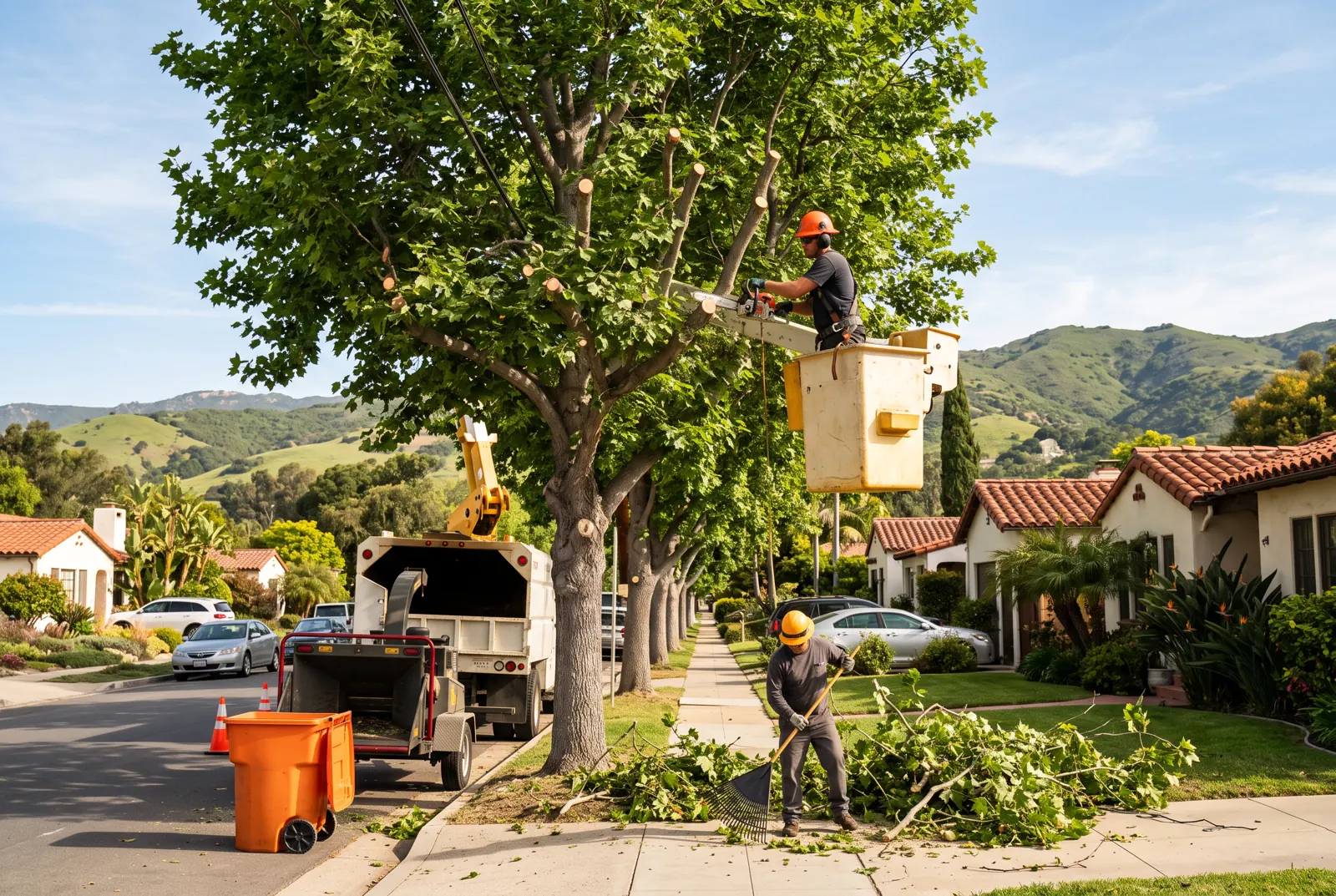
For most trees in Goleta, the best time to prune is late summer through fall, roughly September to November. Bird nesting season is mostly over, and trees are ready before winter storms. Native oaks do best in the dry season, July to October, while deciduous fruit trees and sycamores are usually pruned while dormant in winter.
Goleta's mild climate means you can prune most trees in almost any month. The real limits come from three local calendars: bird nesting season (roughly February through August), monarch butterfly season in the eucalyptus groves (roughly October through February) and winter storm season (roughly December through March). The tables below fit each tree type around them.
Best Pruning Time by Tree Type
Prune coast live oaks July to October, sycamores and deciduous fruit trees in winter dormancy, palms and eucalyptus in fall before storm season, and hedges in spring and late summer with a nest check first. Dead, broken or hazardous limbs can come off any time of year.
| Tree type | Best window in Goleta | Avoid |
|---|---|---|
| Coast live oak | Dry season, about July–October | Wet season and spring growth (about November–June); removing more than ~25% of live canopy |
| Western sycamore | Dormant season, about November–January, or late summer–fall | Heavy cuts during spring nesting |
| Fan palms and Canary Island date palms | September–November, after nesting and before storms | Cutting green fronds; nesting months without a nest check |
| Eucalyptus (outside groves) | September–November, before winter storms | Grove trees during monarch season (Oct–Feb); topping |
| Deciduous fruit trees (apple, pear, peach, plum) | Dormant season, about December–February | Heavy pruning in spring bloom |
| Apricots | Late summer, after harvest, in dry weather | Pruning in wet winter weather |
| Citrus and avocado | Light pruning in spring, after the coldest weather | Big cuts that expose bark to summer sun |
| Hedges | Spring after the growth flush, and again late summer | Trimming during nesting without checking for nests |
Month-by-Month Tree Pruning Calendar for Goleta
January and December suit dormant pruning of fruit trees and sycamores. February through August is nesting season, so every job starts with a nest check. July to October is the oak window. September to November is the best all-round pruning season. October through February, avoid work in monarch groves without City guidance.
| Month | Good time for | Watch out for |
|---|---|---|
| January | Dormant pruning of fruit trees and sycamores; storm cleanup | Winter storms; monarchs in eucalyptus groves |
| February | Finish dormant fruit-tree pruning early in the month | Nesting season begins; monarchs still in groves; storms |
| March | Storm cleanup, deadwood removal | Nesting; late storms; spring growth (skip oaks) |
| April | Light hedge shaping after a nest check; light citrus and avocado pruning | Peak nesting; no heavy oak pruning |
| May | Hedges after the spring flush (nest check first); deadwood | Peak nesting |
| June | Light shaping and deadwood | Nesting; summer heat on freshly exposed bark |
| July | Oak and sycamore pruning begins; apricots after harvest | Late nesting (check first); eucalyptus summer branch drop |
| August | Oaks, sycamores, late-summer hedge trim | Nesting tapers off; summer branch drop |
| September | Oaks, palms, eucalyptus, general pruning: the best all-round month | Few local limits |
| October | Oaks (end of window), palms, eucalyptus away from groves, storm prep | Monarchs return to the groves |
| November | Storm-prep pruning, palms, eucalyptus outside groves, sycamores going dormant | Monarch season; oak window closed |
| December | Dormant pruning of fruit trees and sycamores | Winter storm season begins; monarch season |
Why Timing Matters More in Goleta
Nesting birds. Active bird nests are protected by California Fish and Game Code §3503 and the federal Migratory Bird Treaty Act. Nesting season runs roughly February through August, and hedges, palms and dense trees are favorite nest sites. We check every tree before cutting and wait or change the plan if we find an active nest.
Monarch butterflies. Monarchs overwinter in Goleta's eucalyptus groves around Ellwood Mesa and the Coronado Butterfly Preserve, roughly October through February. Monarch habitat is protected under Goleta's zoning code, and tree work in or near groves may be restricted. See our Goleta tree permit guide.
Winter storms and sundowners. Storms from about December through March, and the strong evening sundowner winds off the Santa Ynez Mountains, are when weak limbs fail. Pruning in fall removes deadwood and heavy, overextended limbs before the weather tests them.
When Should You Prune Oaks and Sycamores?
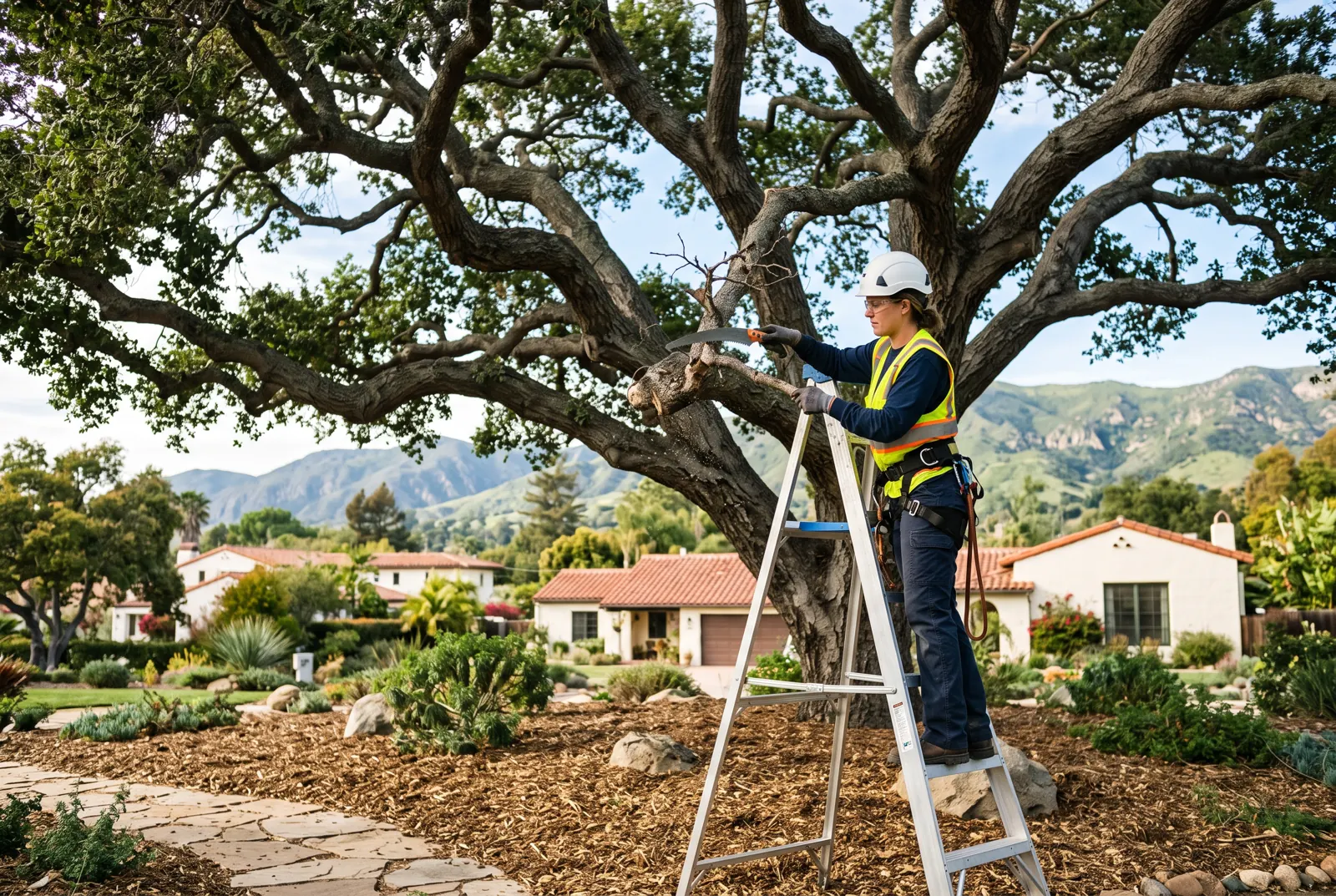
Prune native coast live oaks in Goleta's dry season, roughly July through October. Sycamores can be pruned while dormant in winter or in late summer and fall. For both, remove no more than about 25% of the live canopy at once, never top the tree and protect the root zone.
Dry weather means fewer fungal spores landing on fresh cuts, which is why oaks are pruned in summer and early fall. Western sycamores lose their leaves in winter, which makes it easy to see their structure. Winter pruning also lets us take out twigs killed by anthracnose, a leaf-and-twig disease sycamores often get after cool, wet springs. Keep trenching, grade changes and heavy equipment out from under the drip line, and don't water a lawn against an oak trunk. More on oak tree care in Goleta.
When Should You Trim Palm Trees?
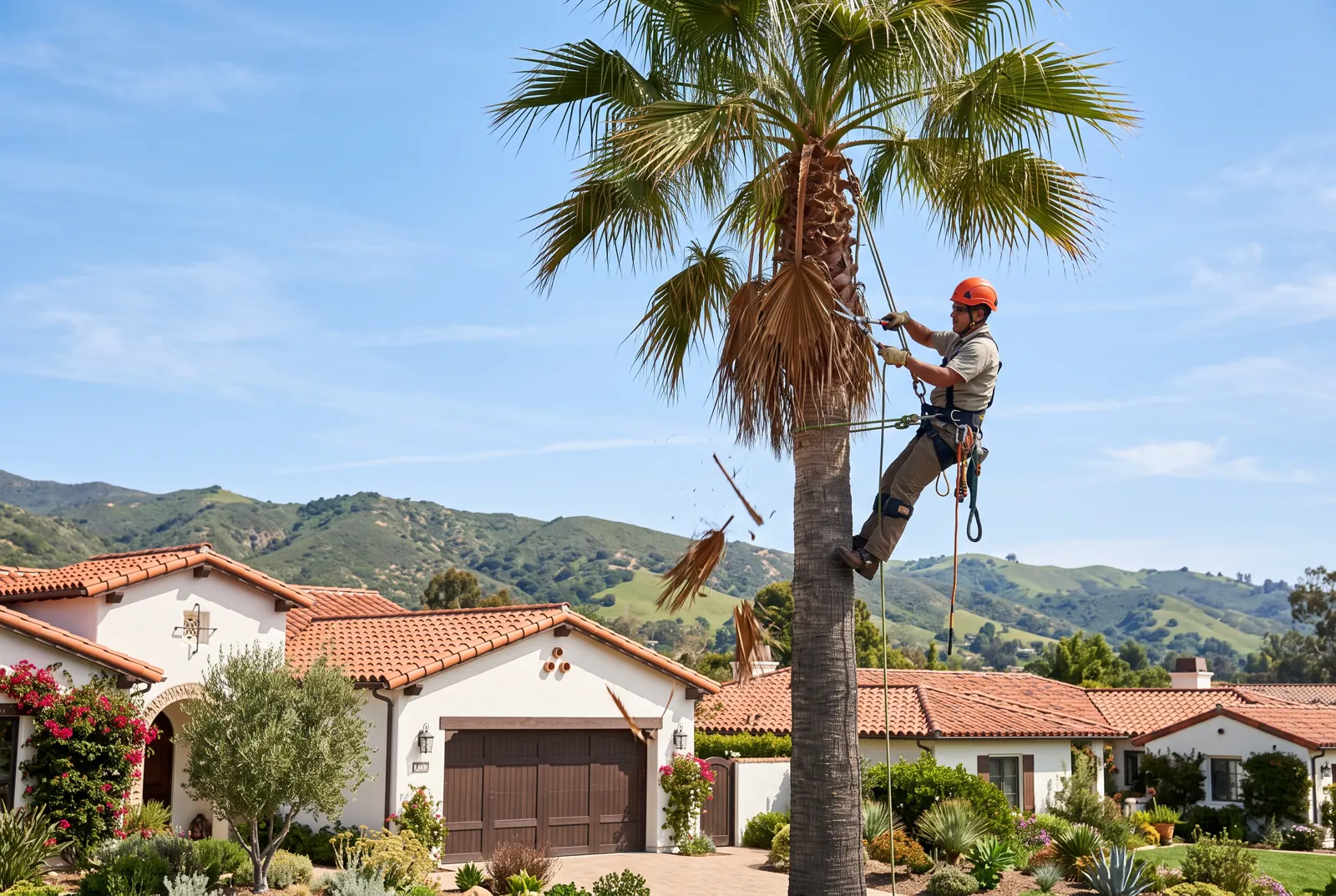
The best time to trim palms in Goleta is September through November. Nesting season is over, and dead fronds and seed stalks come off before winter storms can drop them. Remove only dead and dying fronds; cutting green fronds weakens the palm.
Fan palms usually need trimming about once a year. Canary Island date palms are slower, heavier work, and tools should be cleaned between palms to avoid spreading Fusarium wilt, a fatal palm disease spread on pruning saws. See palm tree trimming in Goleta.
When Should You Prune Eucalyptus?
Prune eucalyptus in early fall, ideally September, before winter storm season and before monarchs return to the groves in October. Trees outside groves can be pruned through November. Dead or cracked limbs over a house, driveway or play area should come off whenever you spot them.
Big blue gum eucalyptus drop limbs year-round, including summer branch drop on hot, calm days. Good eucalyptus pruning removes deadwood and reduces long, heavy limbs over targets; it never means topping, which makes regrowth weaker. If you're worried about a specific tree, read our guide to eucalyptus warning signs.
When Should You Prune Fruit Trees and Hedges?
Prune deciduous fruit trees such as apples, pears, peaches and plums while dormant, about December through February. Prune apricots in late summer after harvest. Give citrus and avocado only light pruning in spring. Trim hedges after the spring growth flush and again in late summer, checking for nests first.
Apricots are pruned in dry summer weather because a branch-killing fungal disease enters through pruning cuts in wet weather. Citrus and avocado bark sunburns easily, so avoid big cuts that open the canopy to summer sun.
Can You Prune Trees Any Time of Year?
Yes, for safety work. Dead, broken, cracked or hanging limbs can and should be removed any time of year, as long as there are no active nests. The calendar above is about routine, health and shaping cuts, not about leaving a hazard in place.
After a storm or sundowner wind, call our 24/7 emergency tree service for anything resting on a roof, car or fence.
How Much Should You Prune at Once?
Less than most people think. We prune to ANSI A300 standards and ISA best practices: no more than about 25% of the live canopy on oaks in one season, no topping, no lion-tailing (stripping inner branches and leaving foliage only at the tips) and no climbing spikes on trees we're keeping. Good pruning looks natural when it's done.
Ready to get on the schedule? Book tree trimming in Goleta for the right season, call (805) 586-9580 or send a photo through our free estimate form.