Eucalyptus Tree Removal in Goleta, One Section at a Time
Goleta Tree Service Pros handles eucalyptus tree removal in Goleta for single yard trees and rows of old windbreak gums. A climber rigs the tree down in controlled sections, we chip the limbs and shredded bark, and we haul the heavy wood away. When a tree can be kept, we trim it to cut limb-drop risk instead.
Blue gum eucalyptus is part of Goleta's landscape, from the old windbreak rows along former ranch land to the single giant that shades half a backyard off Cathedral Oaks. Many of those trees are now taller than anything around them, and they sit close to houses, garages and fences that were built long after the trees were planted. That combination is why eucalyptus gets its own page on this site.
Why Are Eucalyptus Trees Risky Near Goleta Homes?
Blue gums grow 80 to 150 feet tall, carry very heavy limbs and can drop them without warning, even on calm summer days. Goleta's sundowner winds and winter storms add more stress. Their oily, shedding bark is also a fire fuel, and their big root plates can lift paving and walls.
- Summer branch drop. Large eucalyptus can shed a healthy-looking limb on a hot, still afternoon. There's often no crack or warning beforehand.
- Wind loading. A tall, top-heavy crown catches sundowner gusts, and saturated winter soil lets the root plate shift.
- Weight. Eucalyptus wood is dense. A limb that looks modest from the ground can weigh more than a car once it's falling.
- Bark and litter. Long strips of oily bark and dry leaves pile up on roofs, gutters and under the tree. That matters in fire-prone parts of town; see fire clearance in Goleta.
- Roots. Wide surface roots lift driveways, patios and garden walls as the tree grows.
Not sure how worried to be? Our guide Is your eucalyptus tree dangerous? walks through cracks, leans, cavities and root lift, and what each one means.
Should You Remove or Trim Your Eucalyptus?
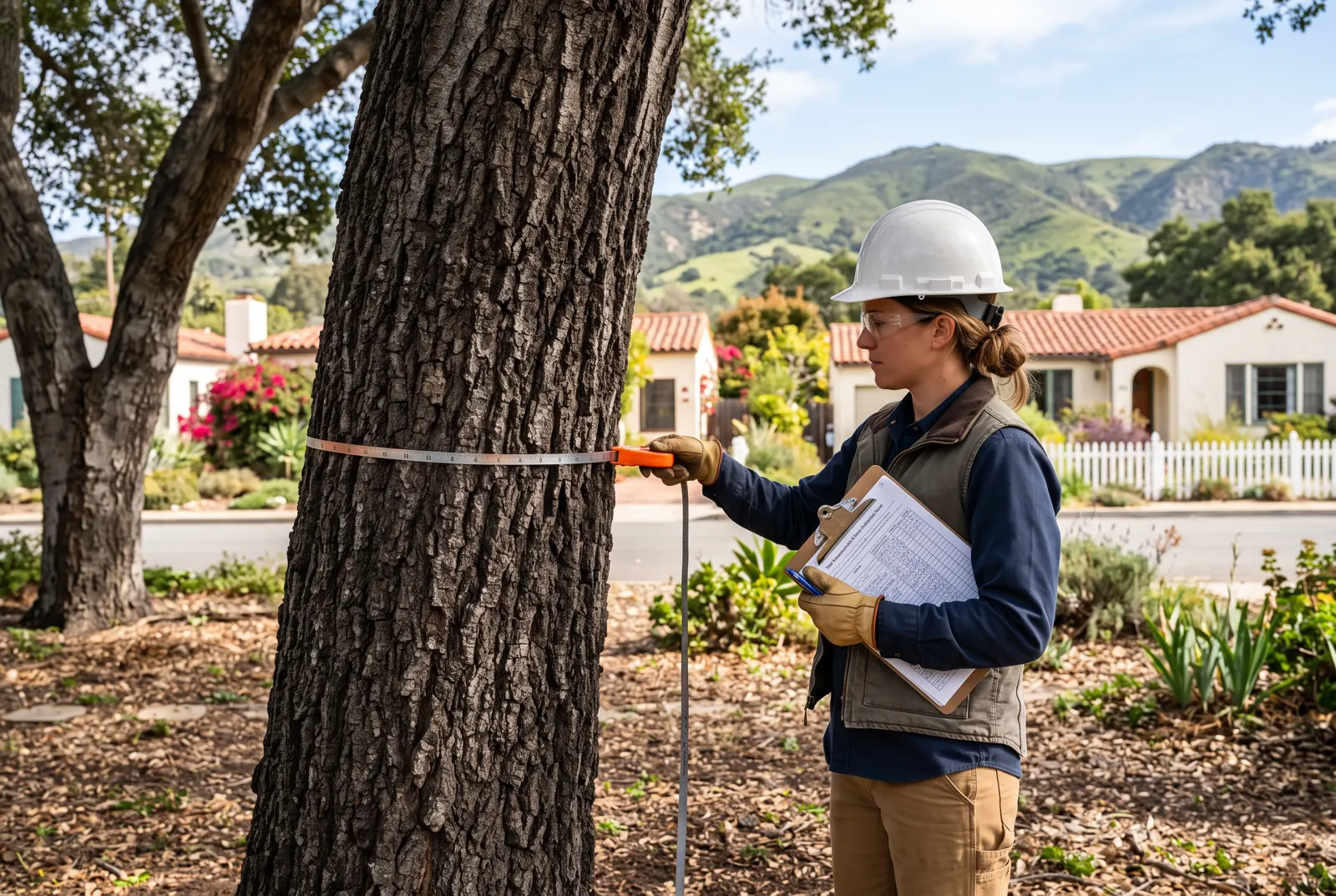
Trim when the tree is sound and the risk comes from a few limbs: deadwood, long heavy ends, or branches over the roof. Remove it when the trunk or root plate is compromised, the tree leans toward a house, or the size simply doesn't fit the space anymore. An arborist inspection settles close calls.
Good eucalyptus trimming means removing deadwood, shortening long, end-heavy limbs back to sound side branches, and clearing the roof and chimney. It does not mean topping. A topped eucalyptus pushes out a crowd of fast, weakly attached sprouts that become the next generation of falling limbs, usually within a few years. For trees over a house, a pool or a play area, a written arborist report in Goleta gives you a documented risk rating, which also helps with HOAs, insurers and neighbors.
How We Take Down a Large Eucalyptus
- Habitat and nest check. We confirm the tree isn't in monarch habitat, a creek corridor or on City property, and check for active nests during nesting season.
- Plan the drop zones. We map where each limb and trunk section will land and protect lawns, pavers and planting beds.
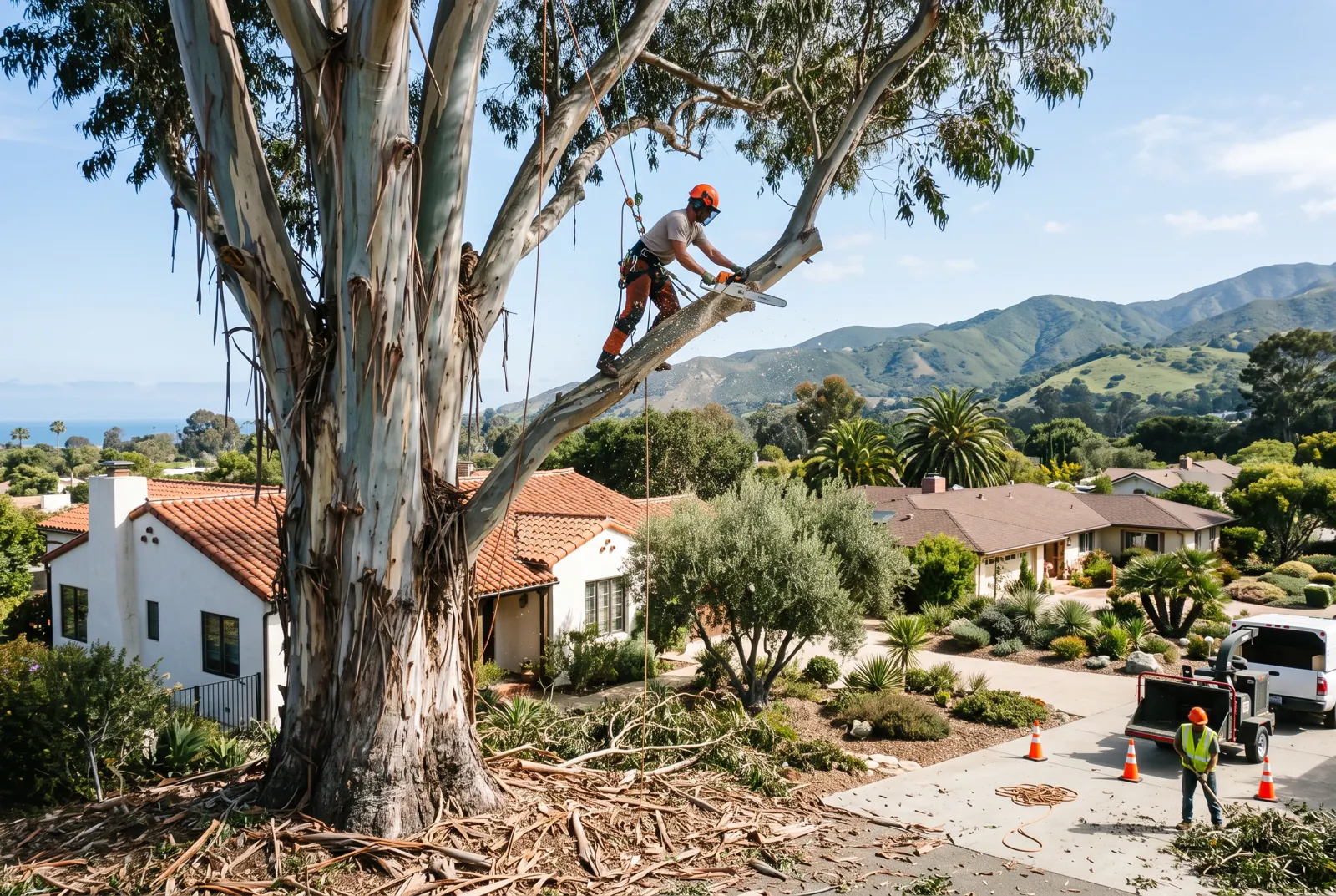
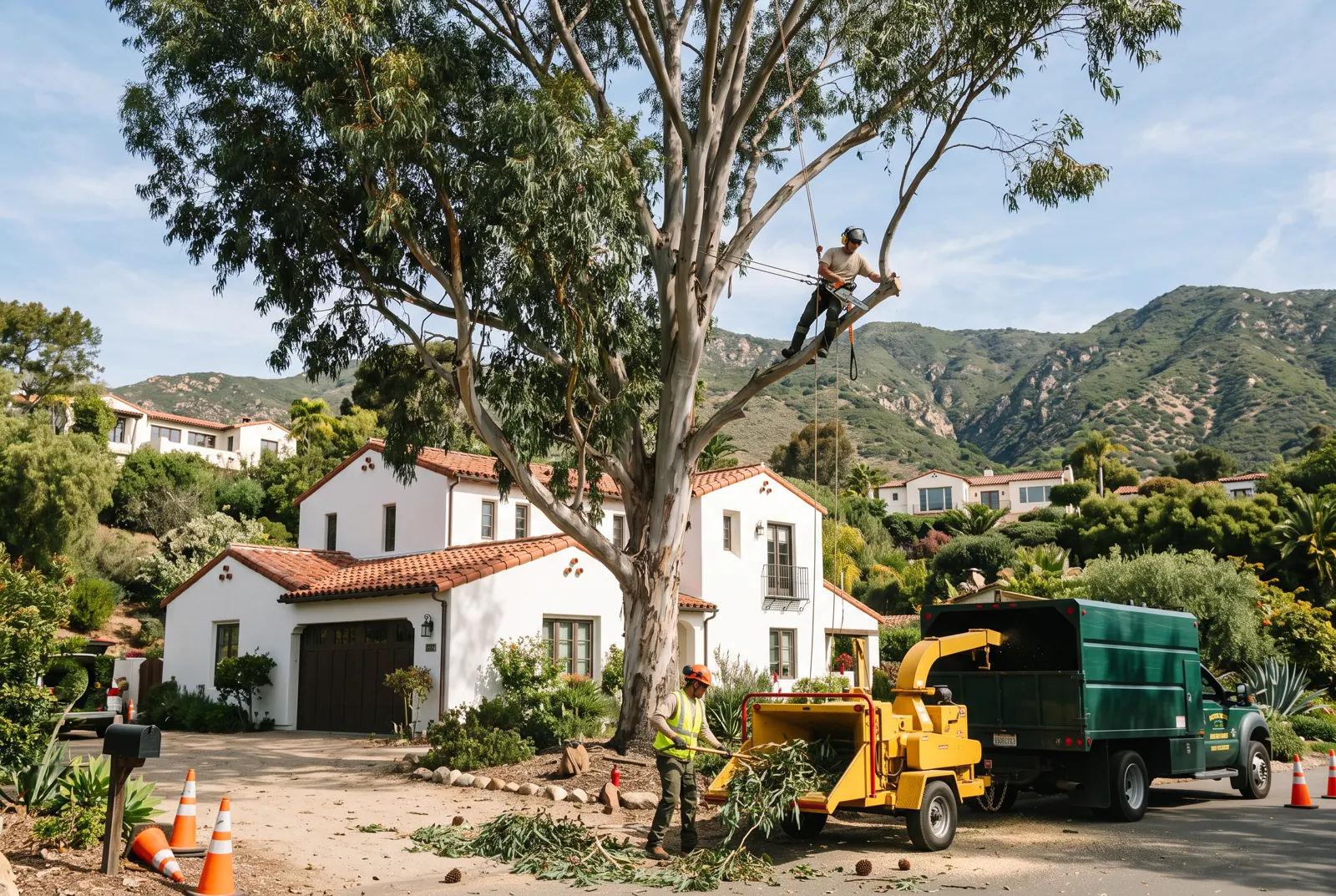
- Climb and rig. The climber works from the top down, roping off limbs and lowering trunk sections in short, controlled pieces.
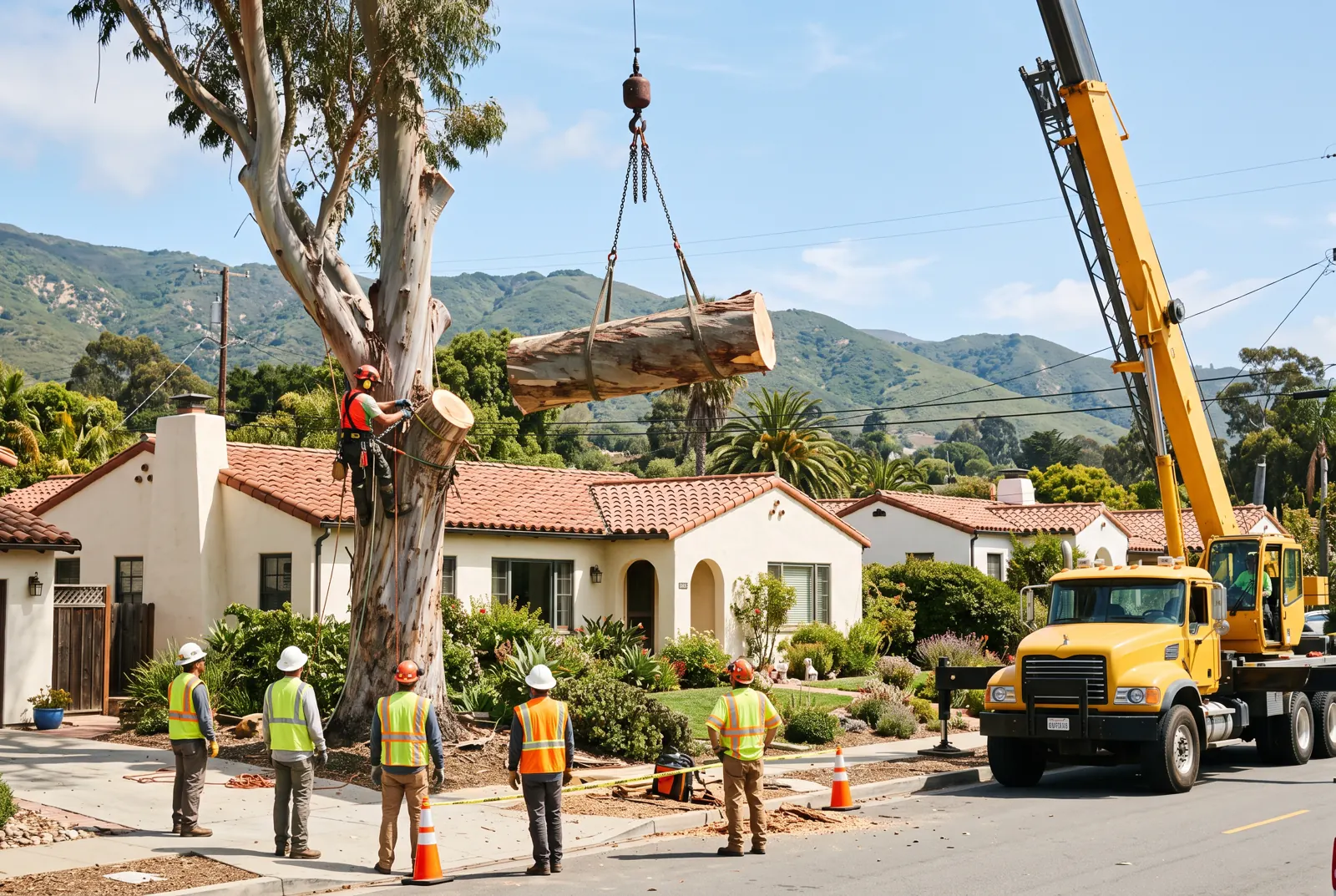
- Crane if there's no room. When a gum stands over the house with no landing space, a crane lifts the pieces out instead. See crane tree removal in Goleta.
- Chip and haul. Eucalyptus produces a lot of debris. Bark strips, leaves and brush go through the chipper; trunk wood is hauled off.
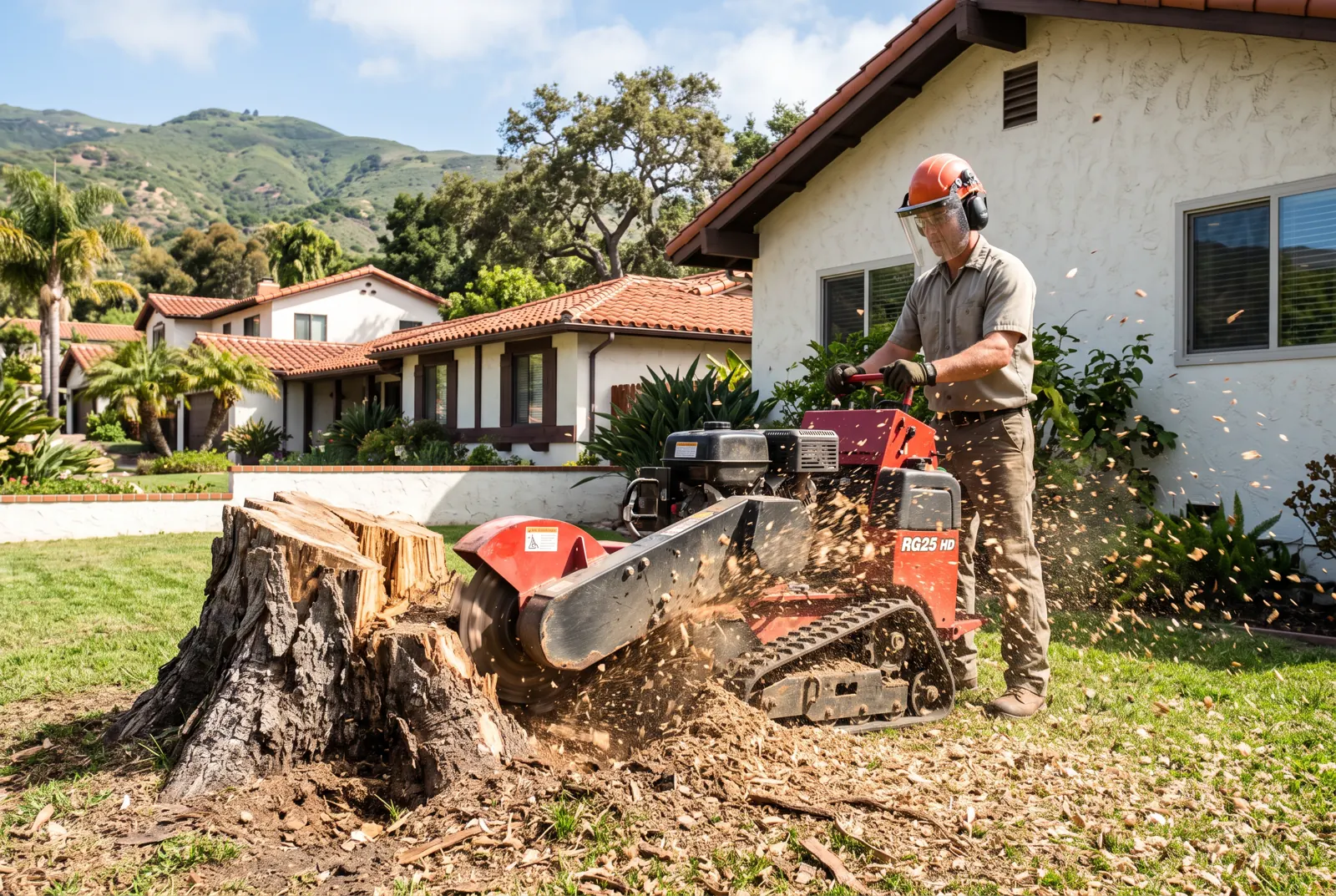
- Deal with the stump. Eucalyptus stumps resprout, so this step matters (more below).
Monarch Groves, Nesting Birds and Permits
Monarch butterflies overwinter in Goleta's eucalyptus groves, around Ellwood Mesa and the Coronado Butterfly Preserve, roughly October through February. Goleta's zoning code protects environmentally sensitive habitat, including monarch habitat (§17.30.180), and tree removal there is restricted. If your trees are part of a grove, near a creek or tied to a development project, check with Goleta Planning and Environmental Review before any work. A single eucalyptus in an ordinary private yard usually doesn't need a general City permit, but street trees and Heritage Trees do have rules. Our Goleta tree permit guide lays them out. This is general information, not legal advice.
Nesting season: Hawks, owls and songbirds all nest in tall eucalyptus. From roughly February through August we check for active nests before cutting, and we wait or change the plan if we find one.
How Much Does Eucalyptus Tree Removal Cost in Goleta?
Removing a large eucalyptus in Goleta usually costs $3,000 to $10,000 or more. Smaller gums under 50 feet fall closer to normal removal prices, while a giant over a house that needs a crane can reach $6,000 to $18,000 or more. Trimming a large eucalyptus typically runs $1,200 to $3,500.
| Eucalyptus job | Estimated 2026 range |
|---|---|
| Medium eucalyptus removal (25–50 ft) | $1,200–$2,800 |
| Large eucalyptus removal | $3,000–$10,000+ |
| Crane-assisted eucalyptus removal | $6,000–$18,000+ |
| Large eucalyptus trimming | $1,200–$3,500 |
| Large eucalyptus stump grinding | $400–$1,200 |
Eucalyptus costs more than most trees of the same height because the wood is heavy, the tree produces a big volume of bark and brush to chip, and tall gums often stand where there's no room to drop anything. Haul-away is included in every quote. The Goleta tree removal cost guide covers the other price drivers.
Stopping a Eucalyptus From Growing Back
Cut a eucalyptus to the ground and it often fights back. The stump sends up a ring of sprouts from buds under the bark, a habit called coppicing, and left alone those sprouts turn into a multi-trunk tree within a few seasons. Grinding well below grade removes the root collar where most sprouts start. Any shoots that appear afterward should be knocked off early. Our stump grinding in Goleta page explains depth and follow-up.