Neighbor's Tree Over Your Yard: Quick Answer
In California, you can generally trim a neighbor's branches and roots that cross onto your property, up to the property line, at your own cost. You can't go onto their property without permission, and you can't cut in a way that kills or seriously damages the tree. Don't throw the cuttings back over the fence.
Neighbor tree questions come up all the time in Goleta, where big eucalyptus, pines and pepper trees often stand right along the fence. This guide explains the basic California rules in plain English and how we handle these jobs. It's general information, not legal advice. For your specific situation, talk to a California attorney.
Who Owns a Tree on or Near the Property Line?
Under California Civil Code §833, a tree whose trunk stands wholly on one property belongs to the owner of that property, even if its branches and roots reach next door. Under §834, a tree whose trunk stands partly on both properties is owned in common by both neighbors.
| Where the trunk is | Who owns the tree | What that means |
|---|---|---|
| Wholly on your neighbor's land | Your neighbor (Civil Code §833) | You may generally trim what crosses onto your side, up to the line. Only the owner can remove it. |
| Wholly on your land | You | Your tree, your responsibility, even the parts over your neighbor's yard. |
| On the property line | Both owners in common (Civil Code §834) | Neither owner should remove or badly damage it without the other's agreement. |
| In the strip between sidewalk and street | Often the City (street tree) | City approval is needed to cut or remove it. Call Goleta Public Works, (805) 961-7575. |
Not sure where the line is? A fence isn't always on the property line. A survey settles it.
Can You Trim a Neighbor's Tree That Hangs Over Your Yard?
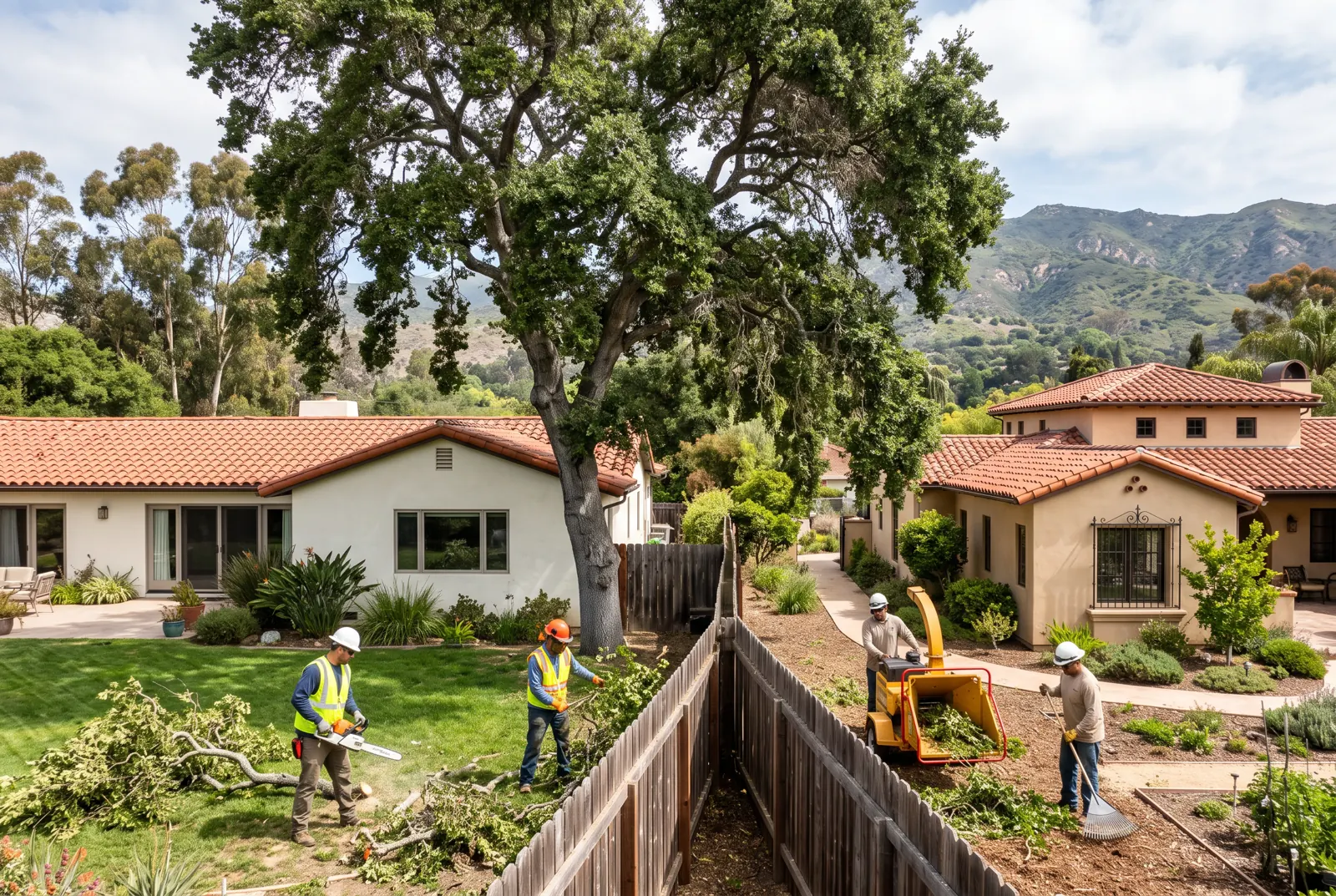
Generally, yes. California law lets you trim branches that cross onto your property, up to the property line, at your own cost. But the right has limits: you can't trim in a way that kills or seriously damages the tree, and you can't enter your neighbor's yard to do it without permission.
The limit on damage comes from a 1994 California appeals case, Booska v. Patel. In practice, it means taking off a few overhanging limbs is usually fine, while cutting off half of a tree's canopy, or every root on one side, can leave you responsible if the tree dies or falls.
How we handle overhanging-branch jobs:
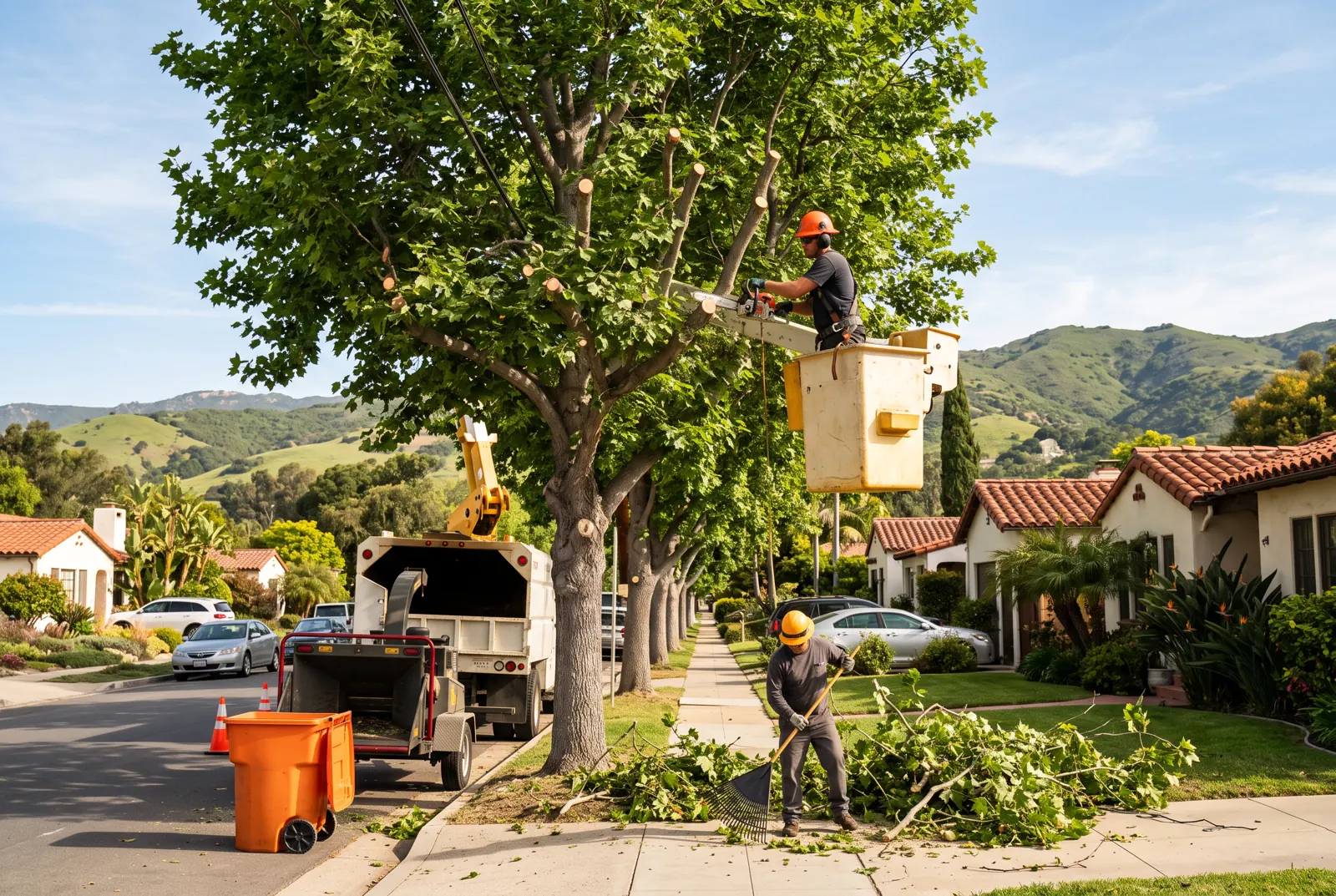
- We cut from your side only, unless your neighbor gives permission to come into their yard.
- We prune to ANSI A300 standards, making proper cuts at a branch union on your side of the line, not ragged stubs.
- If the cut would remove a large share of the tree, we'll tell you before we start and suggest a better plan.
- We haul away everything we cut. Nothing goes back over the fence.
Learn more about tree trimming in Goleta.
Can You Cut a Neighbor's Tree Roots?
The same general rule applies to roots: you may usually cut roots that cross onto your property, but not in a way that kills or seriously damages the tree. Root cutting is riskier than branch trimming, because cutting large roots near the trunk can make a tree unstable and likely to fall.
If roots are lifting your driveway, patio or foundation, get an arborist's opinion before you trench. An arborist can tell you how close to the trunk you can cut safely and whether a root barrier makes sense. Before any digging, call 811 (DigAlert) to mark buried utilities.
Can You Throw Your Neighbor's Branches Back Into Their Yard?
No. When you trim branches that hang over your side, the cuttings are yours to dispose of. Throwing them back over the fence can start a dispute and may create liability for you. Have them hauled away instead; our quotes always include haul-away.
What If You Cut or Damage a Neighbor's Tree?
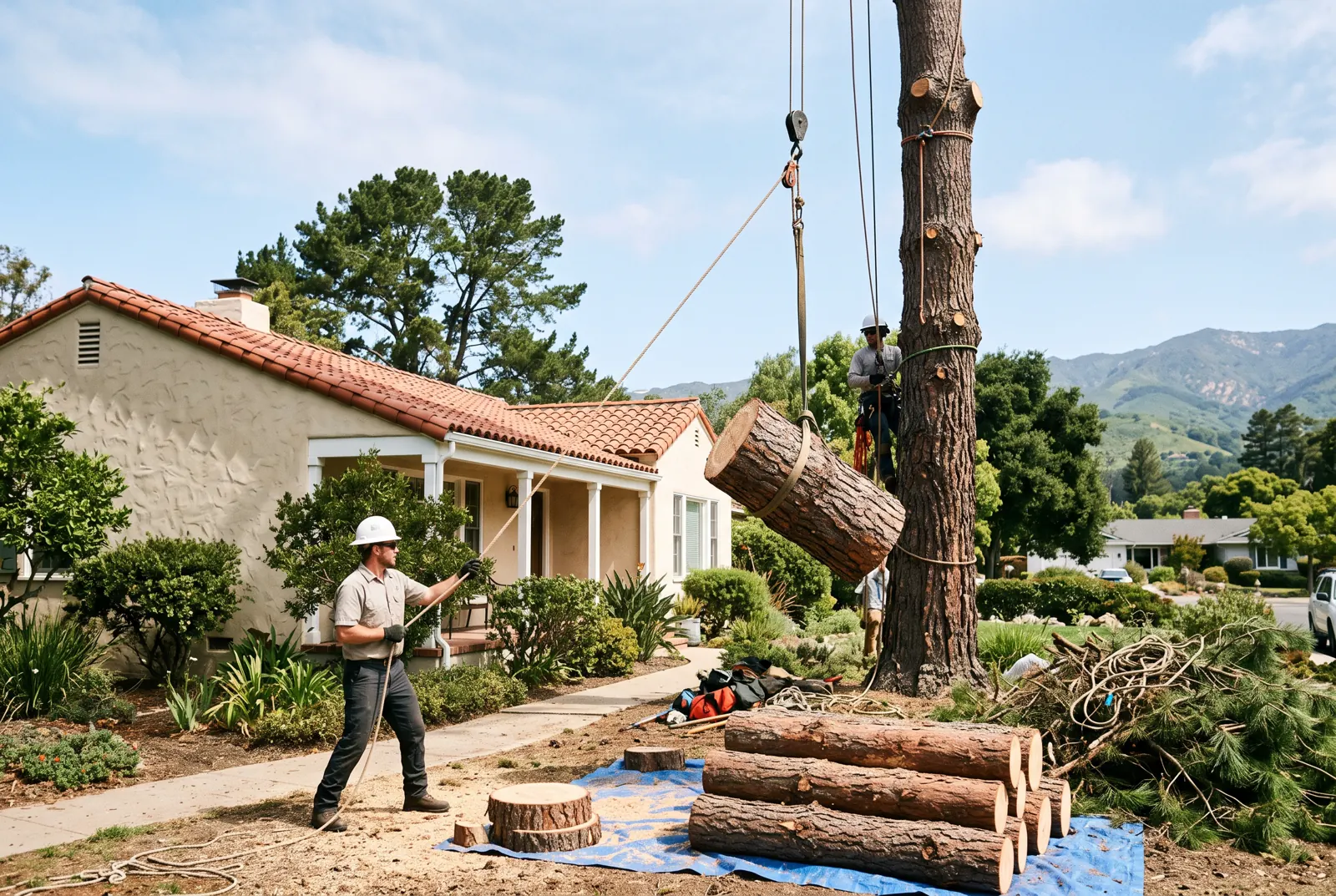
Wrongfully cutting down or injuring another person's tree can be expensive. Under California Civil Code §3346, damages for wrongful injury to trees can be doubled or tripled. Never remove a tree you don't own, and never remove a shared property-line tree without the other owner's agreement.
That's why we confirm who owns a tree before we cut it. If a tree's trunk sits on the line, we'll ask for both owners' agreement before removal.
What If a Neighbor's Tree Falls on Your Property?
It depends on the facts. When a healthy tree falls in a storm, your own homeowners insurance often handles damage to your property. If the owner knew the tree was dead or dangerous and did nothing, they may share responsibility. Talk to your insurer first, and to a California attorney if there's a dispute.
Either way, safety comes first. If the tree is on your house, car or a power line, keep everyone clear. Call Southern California Edison or 911 if lines are involved, then call our 24/7 emergency tree service. Take photos before anything is moved; they help with any insurance claim.
What If Your Neighbor's Tree Looks Dangerous?
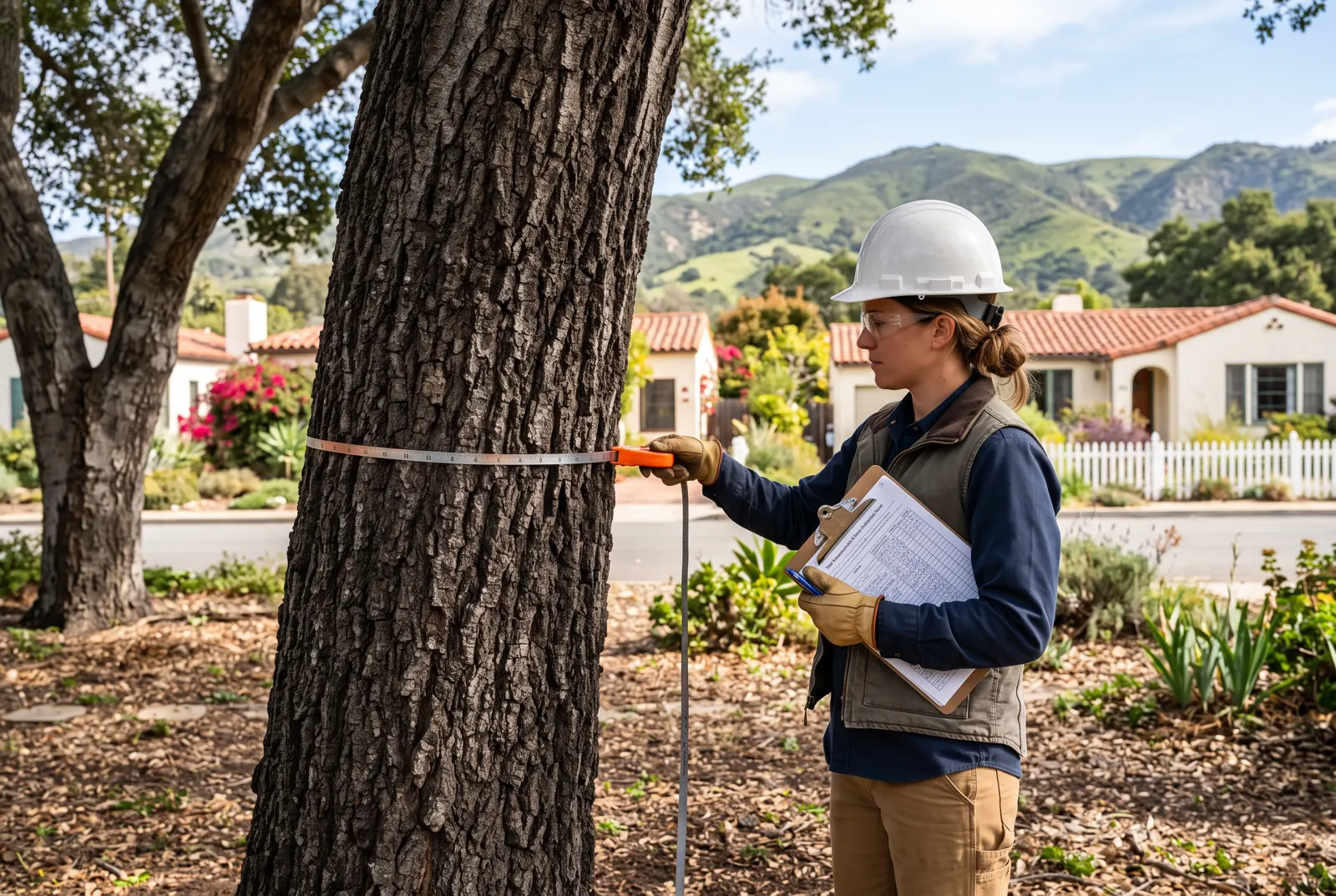
Talk to your neighbor first and share what you've seen: cracks, dead limbs, a lean toward your house. If they're unsure, a written arborist report gives both of you a neutral, professional opinion on the tree's condition and what should be done.
Our arborist reports in Goleta describe the tree's defects, risk and recommended work in plain language that both neighbors, an HOA or an insurer can use. For eucalyptus specifically, see our guide to eucalyptus warning signs.
How to Talk to Your Neighbor About a Tree
Most neighbor tree problems are settled over the fence, not in court. A simple approach:
- Start friendly. Mention the specific problem: branches over the roof, leaves in the pool, roots under the driveway.
- Bring photos. They keep the conversation about the tree, not about each other.
- Get a professional opinion. A free estimate or an arborist consultation gives you both the same facts and a price.
- Offer options. Trimming just your side, sharing the cost of a full pruning, or removal if the tree is failing.
- Put it in writing. A short note or email recording what you agreed and who pays avoids confusion later.
- Get help if you're stuck. If you can't agree, a mediator or a California attorney can explain your options.
If you and your neighbor want to split one job, we can quote the work as a single visit, often less than two separate jobs.
Special Cases in Goleta
- Street trees. A tree in the parkway strip is often the City's. Neither you nor your neighbor can cut or remove it without City approval.
- Protected habitat. Trees in monarch butterfly habitat or creek areas may be restricted under Goleta's zoning code. See our Goleta tree permit guide.
- Nesting birds. Active nests are protected by state and federal law, roughly February through August, no matter whose tree it is.
- Power lines. Branches near overhead lines are a job for Southern California Edison or qualified line-clearance workers, not for you or your neighbor.
General information, not legal advice. This guide summarizes general California rules as of November 2026. Every situation is different. Talk to a California attorney about your specific situation.
Need overhanging branches trimmed back to the line? Call (805) 586-9580 or send a photo through our free estimate form.